

freedom spaces
the 'homework' that turned me into the teacher I am today

Language is the big adventure of my life.
Deborah Levy, interview for Prospect magazine
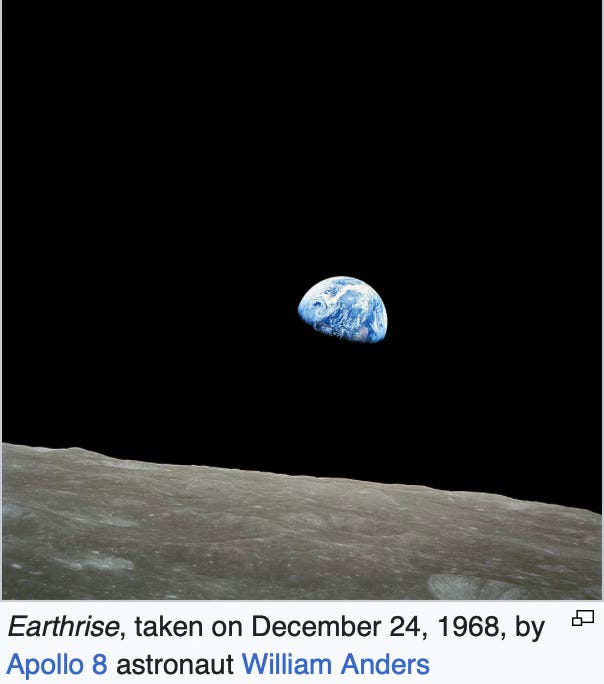
In the beginning there was, and always will be, the Word: written and unwritten, from the innermost language of the self to the gasps of awe at the first sighting of Earthrise (which reverberate into our times)1, via complex printed volumes of human endeavour.
Our most intimate understanding of the world is conjured into being by language. For the most silent and the most confidently outspoken of us alike, the tune of that language is our voice.
This is the story of how I found out that, in order to be truly free, we have to use that voice, in the languages given to us - which are always more than one - to share our stories. We don’t only tell stories ‘in order to live’ (Joan Didion), ‘to survive’ (Umberto Eco), to remember ‘who we are, and why we are here’ (Sue Monk Kidd). Storytelling is capable of so much more: it can empower the master, the novice, the disenfranchised; it can restore, and it can destroy, dignity; it is the breath of life, and it can take lives away.
As cultural practice, storytelling is as old as the human ability to form meaningful utterances. Our brains are literally wired for narrative - there is a story arc in our recounts of mundane events, in jokes, in the flow of news items. We feed on narratives in all areas of life. Some yield a didactic outcome, but the most powerful will provoke questions without spelling out answers. As result of the narrator’s skill and of our capacity for empathy, storytelling can inspire the birth of even more complex (though not always better) worlds.
When I was about 11, the headmistress of General School No. 7, whom we knew and addressed as Comrade Director, started sending for me whenever there was an unexpected need for a cover lesson. I’d turn up to her office, which opened directly onto the school lobby, and stand straight to attention, silent and shy before her desk, knowing exactly what was coming. She would ask, always kindly, if I wouldn’t mind telling a story to the pupils whose teacher wasn’t available. She knew I could come up with something fresh at a moment’s notice and that even older kids would then stay out of trouble for the hour.
I don’t remember much about these stories, but if they were anything like the content of my home notebooks, the protagonists were habitually reared in the natural world: injured creatures I may or may not have rescued from allotments behind our apartment block, or more fantastical ones I dreamt of taming - including mountain deer or a certain jet-black mustang called Prince, appropriated straight from the plains of a Western.
Many of my protagonists, especially the non-human, had escapist, anglophone names. But what’s in a name?
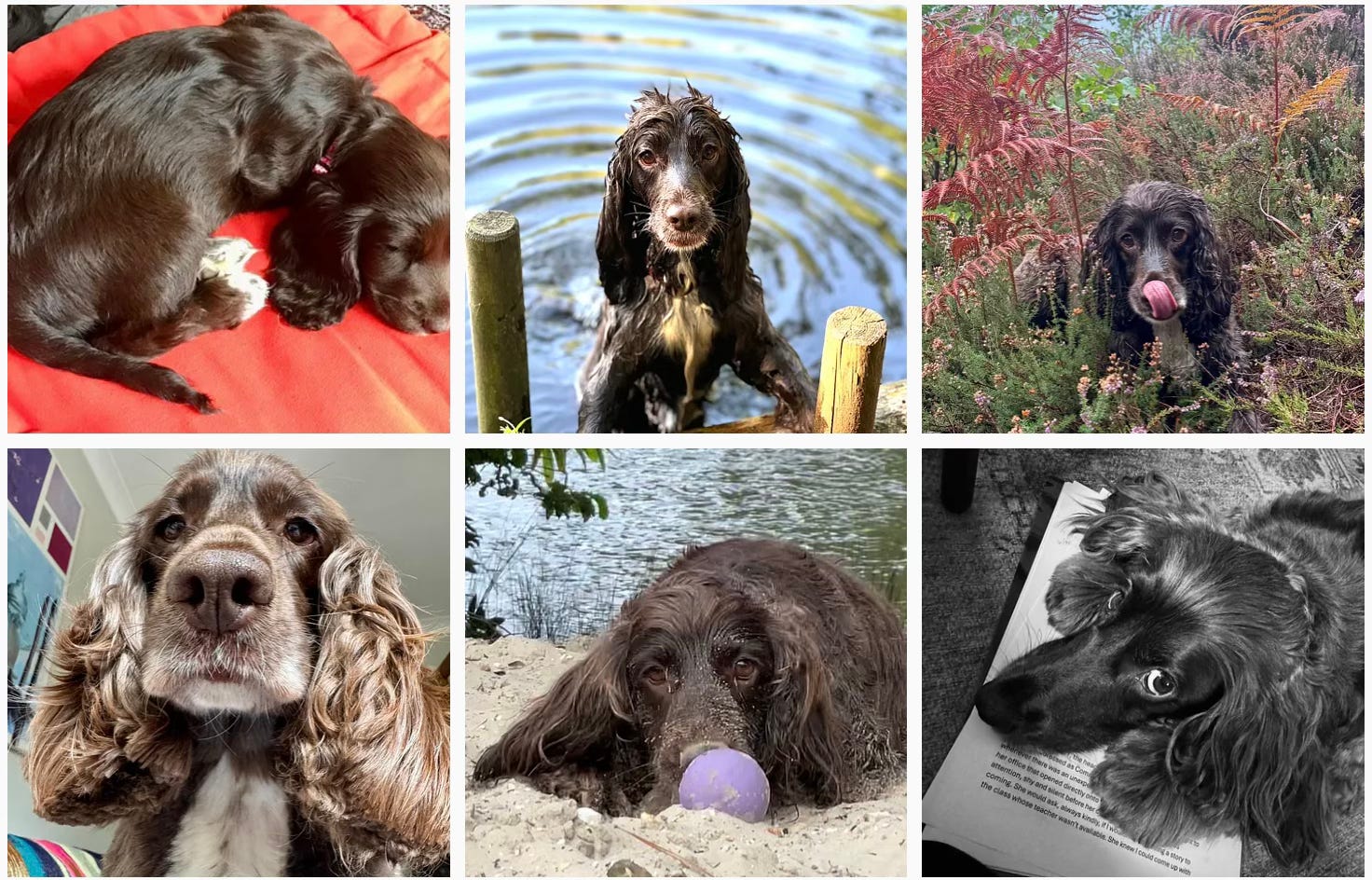
Some stories were the underground adventures of a clever, rust-brown spaniel I hoped to conjure one day into real life (7 years ago, I actually did - proof below!), and whose burrowing under the earth generated an entire universe. This spaniel was always called Annabelle, until one day our headmistress asked if I wouldn’t mind changing her name to something less … capitalist.
‘Like what, Comrade Director?’ I piped up big-eyed in anticipation of a more exciting suggestion.
‘Maybe… ‘Leaf’?’
‘…!?...’
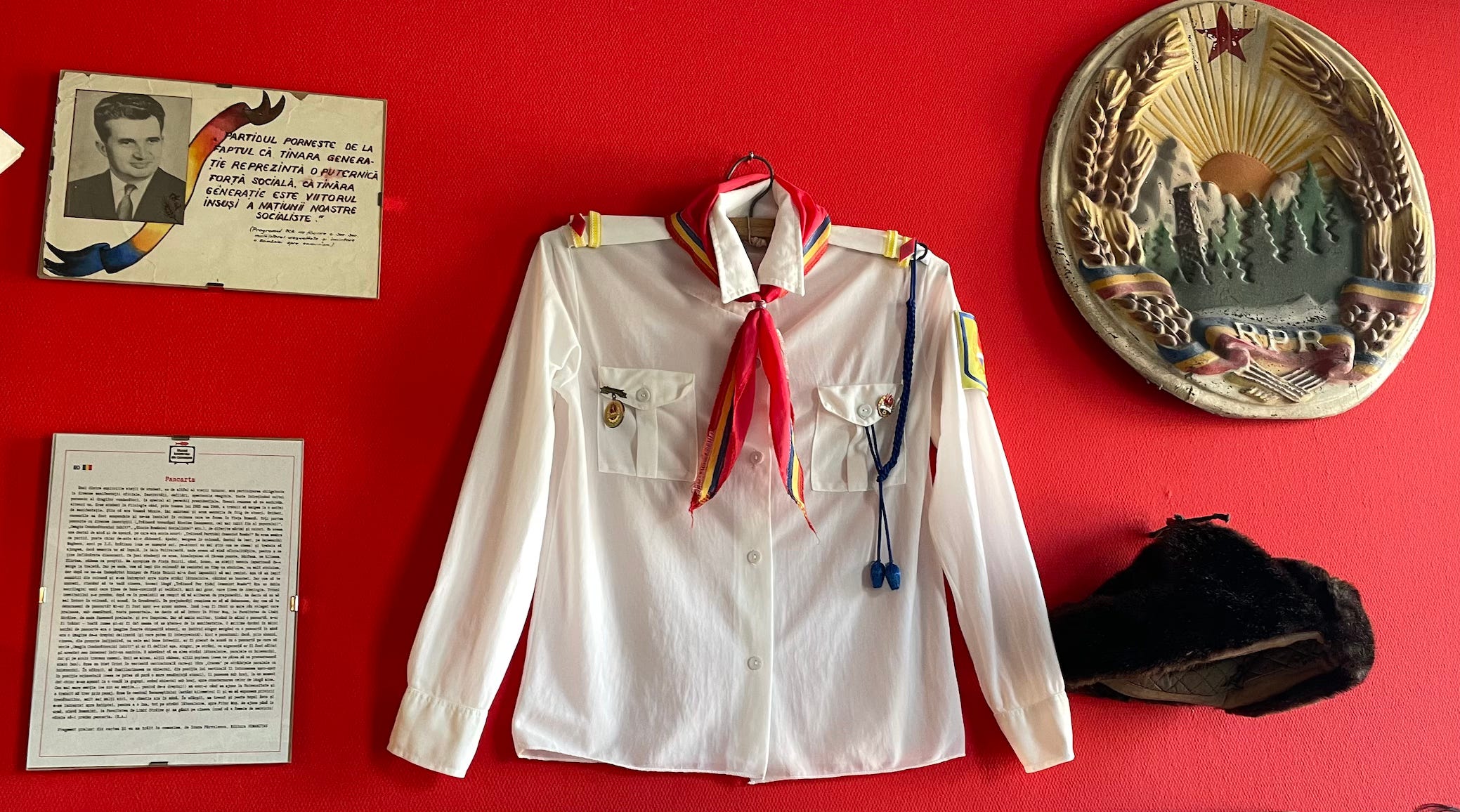
To 11 year old me, ‘Leaf’ sounded daft and devoid of personality, more like debris hanging from my spaniel’s ear; but personal preference was not an option. Least of all for Comrade Director, who was held responsible for any transgressions against the nationalist integrity of the Socialist Republic of Romania, and of our Supreme Father, Comrade Nicolae Ceausescu, the President of the Republic and of the Communist Party. As is the case in all classrooms set up under dictatorship, Comrade Nicolae Ceausescu’s larger-than-life portrait watched over us from above the blackboard as we sang the national anthem before the first lesson of the day, and peered up our uniform sleeves from the frontispiece of each and every textbook.
I nodded in wordless agreement and found solace, albeit of a different kind, in a translated spaniel: Annabelle became a creature patriotically local to our fertile, communist, owned-by-the-state native soil, appropriately named after an oak leaf I made sure would be speckled by the reds and golds of a Carpathian autumn. I still own a carbon copy of the first three pages of the original, handwritten Annabelle story. The script is painstakingly pretty and rather neat (skills from which I’d soon be distracted), set out in sophisticated diction and SPAG (spelling, punctuation and grammar), on plain unlined paper. These frayed, yellowing pages actually introduce vivid, loquacious human characters, about whom I had completely forgotten. The animal world only really opens up at the bottom of page 3. Somehow, from reams of handwritten stories, I only actively remember animal characters. What is it about animals and the natural world that lends them to storytelling and memory with so much ease?
I look at these sheets now as if they were written by someone else; in many ways, they were. I am no longer that 11 year old girl, not even any ‘girl, woman, or other’2 who can speak and write Romanian, a complex Romance language, as beautifully as on this carbon script. Sadly, I no longer own my Romanian voice like a mother tongue and my version of the thing we call identity is in shreds. The Western, capitalist, anglophone escapism of those storytelling days has long since become the reality in which I live, breathe, play and… teach.
When visiting the same class on successive occasions, I’d continue the tale previously started. The reputation of these make-believe cover lessons (where did I, a timid child under any other circumstances, muster the confidence to stand in front of 40 teacher-less kids?) was flattering, but also a great burden. While I relished the opportunity - the ‘freedom’ - of stepping out of school-time into story-time3, this freedom came with the inchoate sense of expectation to stand to attention, always ready, always responsible. And if possible, to excel: there is more to be said about the cost of this privilege, but I’ll save it for another time.
Our freedom spaces, whether underground realms of earthy fantasy and childish folklore, or those of the playground, were no more than the imaginary worlds of any childhood: except ours stretched well into our 14th year. This was not so much symptomatic of 1980s socialist zeigeist as of suppressed access to any zeigeist, and to modernity itself. The cultural, artistic, social, technological advances which would typically nurture and excite a younger generation, lift them off the playground, were the forbidden territory of allegedly corrupt, capitalist systems, which apparently loomed as constant, unspecified threat from beyond the barbed wire of our borders. They also darkened our communist skies with the rumble of aeroplanes that frightened the playground: I’m still not over the realisation, too many years later, that those were simply tourist or cargo planes bisecting our sky. Many of us remained naive well into adult years, with significant impact, for better and for worse on life-choices and relationships (sometimes with inter-generational, and others with tragic, consequences).
Like the fount of creativity hidden inside propaganda arts (addressed in my previous post, Visible Strings) storytelling and make-believe in general were an escape from our scripted, ‘uniformed’ lives - and those of our parents. Little did we know that the very world we inhabited was itself the most masterfully cruel make-believe of them all. Our stories were in fact an escape from its bleak reality show of rationed nourishment and the terror of our homes being tapped or our parents being reported (by otherwise kindly neighbours) and ‘disappeared’ for betraying the communist state through word, thought or aesthetic preference. This didn’t stop our surreptitious enjoyment of things like blue jeans, music or VCR tapes smuggled in from the West by rare relatives of the lucky few who had such illustrious opportunities. Music and movies already out of date on the ‘other side’ became our counter-culture. As long as we stayed clear of Radio Free Europe (and its mystery news stories played exclusively by adults, on extremely low volume, behind closed doors), we’d be safe. The privilege of setting our imagination loose, and in my case the joy of having my peers hop on the flight - was as close to magic as reality could get.
Fast-forward to June 1997: my first job interview, with lesson observation, at an independent boys’ school on the outskirts of London. I’m trying this out as ‘postgrad teacher’ with no training, tentatively intending to pay back my student loan before catching the Eurostar to Paris for a dreamy M.A. in Comparative Literature.
My PowerPoint projects an image of a painting I know well, the handout shows two different ekphrastic poems in response to it. There’s no glossary, no guiding questions, just the raw sources. The Year 9 lesson is the first time I stand before a class on this side of the Iron Curtain. But I’m not here to entertain a bunch of 13 year olds restless in their lesson before lunch. I’m here to prove my teaching potential by delivering a one-off lesson from which these hungry boys will hopefully take something away. I have not been told anything about their programme of study so far. It’s a ‘do what you want’ kind of lesson (read: do what you can, we’re throwing you at the deep end - but if we like you, we’ll have you qualify on the job): the kind of interview lesson offered in the independent sector to the youngest of unqualified teachers, fresh out of their Bachelor degree Finals, with no expectation of school syllabus or pedagogical knowledge. It’s about professional potential and low-cost filling of vacancies in otherwise solid, experienced departments. So here I am being interviewed at this ‘competitive independent day school located in the green belt of London’, my first time in front of a class.
Except it isn’t: the only novelty lies in the positioning, ‘on the other side’: of the classroom, as potential educator, as the adult in the room; the other side of the now bulldozed Wall4 that used to divide my childhood from that of kids like these settling at their desks before me. The other novelty is that, this time, I’m not telling a story. I’m inviting young people I’ve never met before to read and unpack meaning, their own ‘story’, from the image and poems I confront them with.
I don’t expect the intent look on their faces - the hands shooting up, the joy that runs through me at their eagerness to respond. I’m swept by the energy in the room and before we know it, the discussion - detailed, dynamic - reaches a state of flow which tells me: this is what I want to do, for the rest of my life.
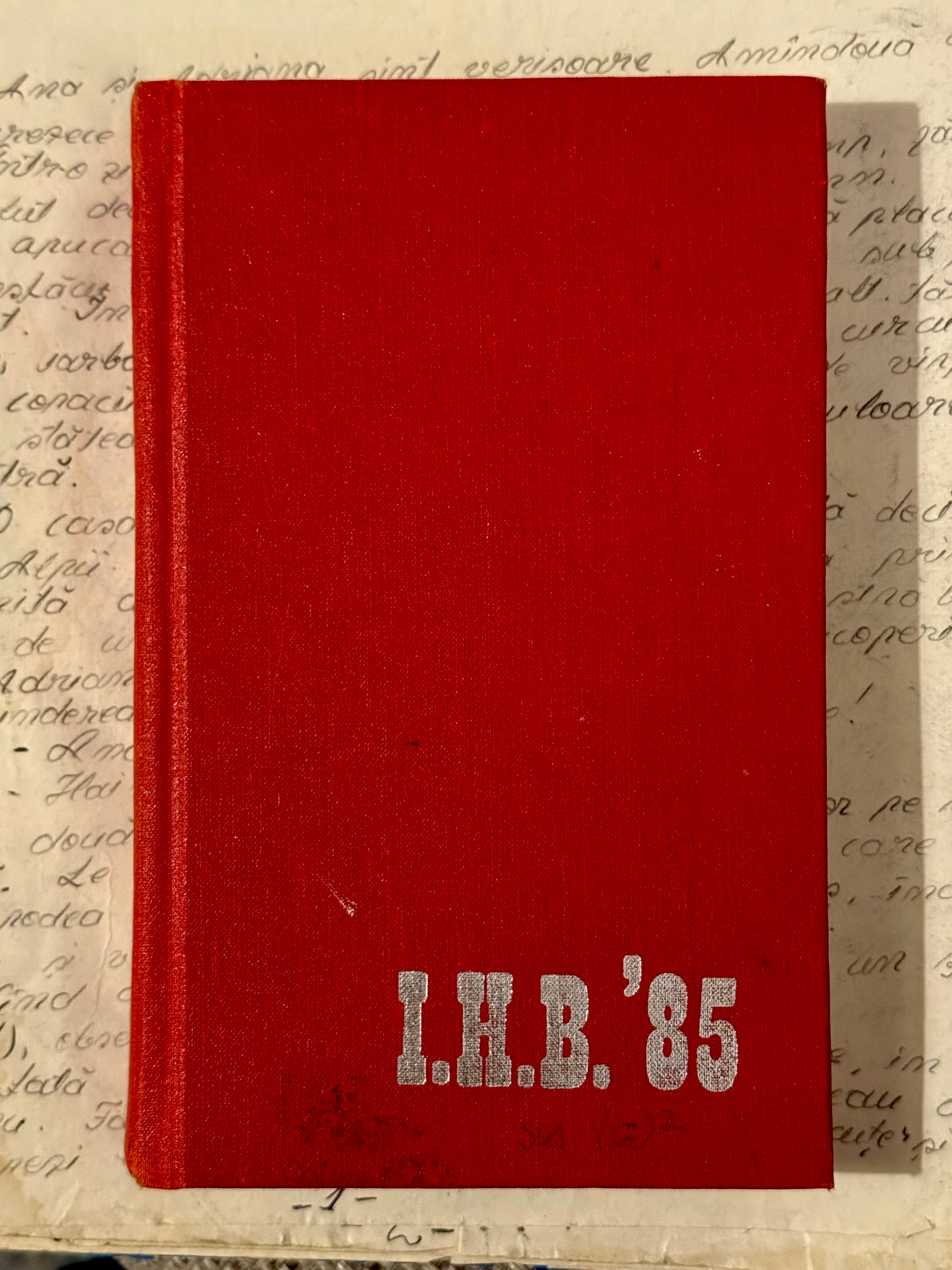
I never caught that train to Paris. And I only learnt this summer, coming across my miraculously preserved childhood diary, how predictably a vocation can grow from the pages of a childhood. In addition, the fact that writing was the (naive, idealistic) raison-d’être of my child self is clear from the statement of intent for a first ‘novel’, announced in the second paragraph of her very first diary entry:
Sunday, 14 July, 1985
Nico doesn’t want to be friends anymore and has send Ana and Monica to ‘teach’ me hide-and- seek. I’m getting really fed up and I noticed that Ana only actually speaks to me when Nico isn’t around.
Today I copied up two of my stories and thought of a new novel: ‘The Stallion from Grandpa’s Herd’. I’ll start writing it tomorrow. Also today I went to play outside without asking mother for permission.
An entry three days later mentions devising a secret alphabet for communicating with another girl and a boy from our street, and the stalling of the horsey novel, because yours truly was stuck for a foal name.
In this diary, weaving in and out of friendship, schoolgirl crushes and animal rescue sagas, one motif stands out as clear as day: from the first pages in school-blue ink to the pencilled ‘farewell to childhood’ of the final entry (July 1990, when I emigrated), this writer was obsessed with education.
This article is an excerpt from a longer piece - thank you for dropping by!
see last year’s Booker winner, Orbital, by Samantha Harvey and the 'Blue' chapter in the World According to Colour, by James Fox
borrowing this cleverly apposite phrase from the great Bernardine Evaristo, whose Substack you should follow instead of reading mine, and whose daring, sumptuously woven novel Girl, Woman, Other, is an exceptional narrative for, and of, our times.
see U. A. Fanthorpe’s fantastic poem, Half Past Two, for a striking illustration of childish escapism from the constraints of Time.
for heart-warming satirical immersion in communist coming-of-age vibes, watch this beautiful film, Goodbye, Lenin!, set in East Germany, or read Kairos, the spectacular but harrowing International Booker Prize win by Jenny Erpenbeck, translated by Michael Hoffman into often breath-taking English prose.
Wonderful! I loved discovering how you became the great inspirazione teacher I met years ago at St.George's 🩵
Wonderful. "Obsessed with education". Me too, my dear friend. No wonder we got along so well when practising our trade side by side. Did you have any English before you left Romania? What an absolute master of the language you are now. How have you done that? I would love to know. Lots of love.